Why Singapore's High-Performers Are Turning to Cold Therapy: The Executive's Guide to Mental Clarity and Stress Resilience
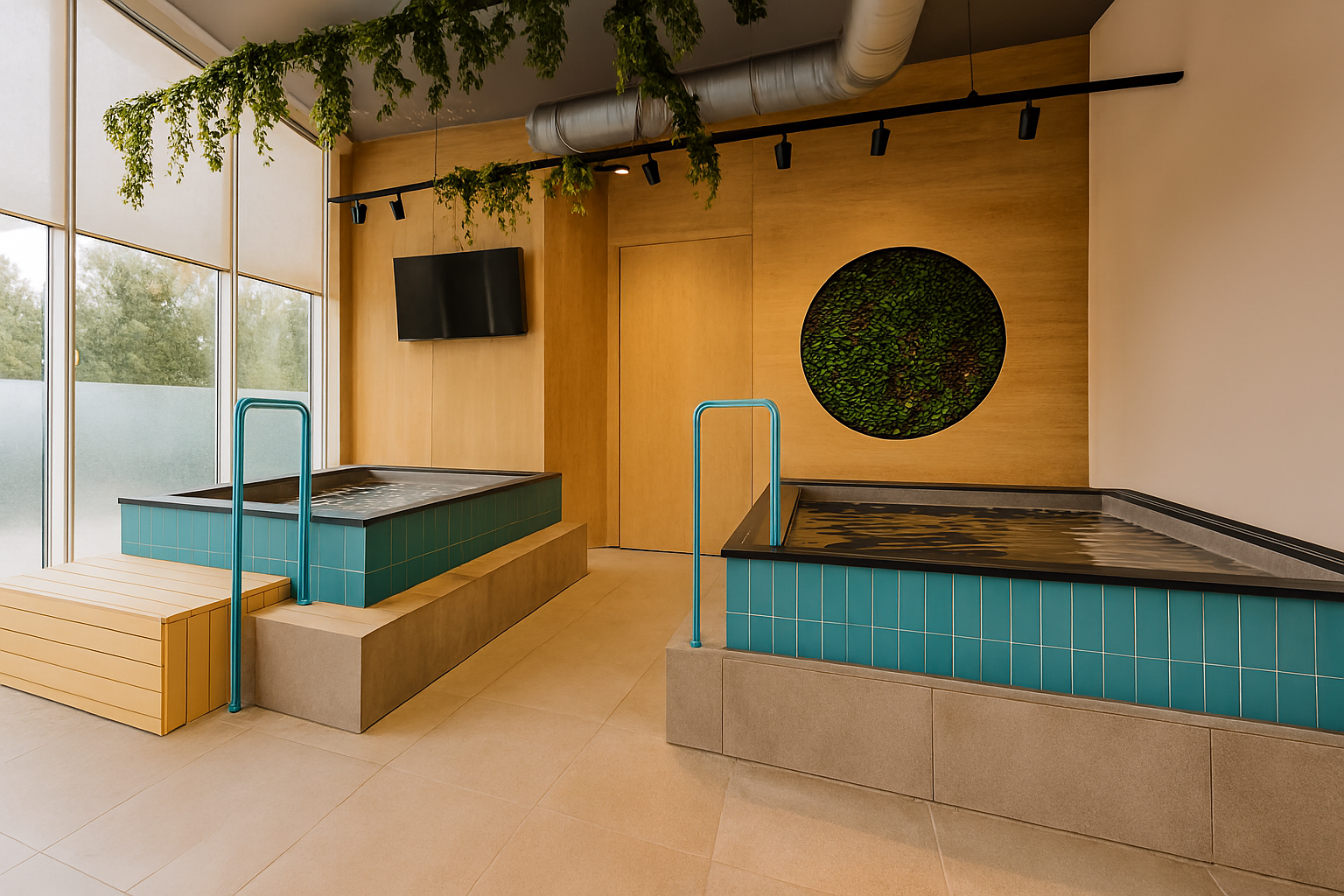
At any given evening in Holland Village, there's a reasonable chance that a managing director, a startup founder, or a senior partner at one of Singapore's professional firms is voluntarily submerging themselves in near-freezing water. Not as a dare, and not as part of some extreme fitness protocol but as a deliberately chosen tool for managing the demands of a high-pressure professional life.
The convergence of biohacking culture, peer influence in executive networks, and a growing body of science on stress management has made cold therapy one of the more quietly fashionable practices among Singapore's professional class. But the evidence base behind this trend is more substantial than most fashionable wellness practices deserve.
Here's what the research says, and why the most analytically minded people in Singapore's business community are paying attention.
The Cognitive Case for Cold
Dopamine, Noradrenaline and Executive Function
A landmark study published in the European Journal of Applied Physiology found that immersion in 14°C water triggered a 250% increase in dopamine levels and a 530% increase in noradrenaline the neurochemicals most directly associated with focus, motivation, attention, and executive cognitive function.
This is neurochemically significant for anyone whose professional effectiveness depends on sustained mental clarity. Dopamine is the primary driver of motivation and goal-directed behaviour. Noradrenaline underpins focus, alertness, and the ability to filter relevant from irrelevant information. Both are depleted by chronic stress which describes the baseline state of most senior professionals.
Unlike pharmacological or stimulant-based interventions, the dopamine and noradrenaline elevation from cold immersion is non-addictive, has no known adverse effects at recommended exposures, and crucially the elevation is sustained. Research shows these levels remained significantly above baseline for up to three hours after subjects left the water.
Stress Inoculation: Training Your Response
The specific mechanism that makes cold therapy particularly valuable for high-performers is what stress physiologists call hormesis: the principle that repeated, controlled exposure to manageable stressors produces adaptation and resilience.
Stanford neuroscientist Andrew Huberman has described the deliberate act of staying calm in the cold of choosing not to exit despite the discomfort as a form of direct training for the prefrontal cortex's ability to override the emotional alarm system. The same neural circuit that keeps you composed in a difficult board presentation, a client negotiation, or a leadership crisis is the one you're strengthening every time you choose to breathe through the first 60 seconds of a cold plunge.
This isn't a metaphor. It's a neurological training protocol.
The Cortisol Problem in Singapore's Professional Culture
What Chronic Stress Does to High-Performers
Cortisol is not the enemy. In appropriate doses and at the right times, cortisol drives performance, sharpens focus, and mobilises energy. The problem which is pervasive in Singapore's professional culture is chronic cortisol elevation: a state where the stress response never fully deactivates between demands.
Chronic cortisol elevation erodes memory consolidation, impairs emotional regulation, disrupts sleep architecture, compromises immune function, and accelerates the cognitive aging process. The executive who is 'always on' is not performing at their peak they are running an acute performance over a depleted baseline.
Cold Therapy as a Cortisol Reset
Research from Stanford's Lifestyle Medicine program found that cortisol levels decreased across all tested temperatures following cold water immersion, and remained significantly lower than baseline for up to three hours after exposure. A 12-week study on regular cold water practitioners found that after four weeks, participants showed markedly reduced cortisol responses their nervous systems had learned to classify the cold as manageable, not threatening.
This stress inoculation effect appears to generalise. The regular cold plunger not only handles the cold better over time they appear to handle other stressors with reduced physiological reactivity as well. For professionals managing high-stakes decisions and complex interpersonal demands, a recalibrated baseline stress response is a genuine operational advantage.
The Focus Window: Why Top Performers Time Their Sessions Strategically
The Post-Plunge State
Most regular cold therapy practitioners describe a characteristic mental state in the 1 3 hours following immersion: heightened clarity, reduced mental noise, strong present-focus, and a kind of calm energy that's distinct from the jittery alertness of caffeine or the dulled focus of fatigue.
This state driven by the sustained dopamine and noradrenaline elevation maps almost exactly onto the conditions that cognitive performance researchers identify as optimal for deep, focused work. Cal Newport's concept of 'deep work,' McKinsey research on peak performance states, and the broader literature on flow all converge on the same conditions: absence of anxiety, presence of motivation, clear attentional focus, and reduced susceptibility to distraction.
Strategic Timing
Many high-performing cold therapy practitioners in Singapore have developed a deliberate practice of timing their sessions before their most demanding cognitive work a morning session before an important presentation, an afternoon plunge before a creative strategy session, or an early evening session to decompress fully before preparing for the next day's challenges.
The 11 minutes per week framework suggested by Andrew Huberman spread across 2 4 sessions is particularly compatible with the schedule of a busy executive. Two or three sessions per week of 3 5 minutes each is enough to maintain the physiological adaptations and the habitual cortisol recalibration that makes the practice valuable for sustained professional performance.
Community and the Social Capital of Shared Discomfort
There's an element of cold therapy culture that doesn't show up in the research literature but is consistently mentioned by practitioners in Singapore's business community: the social dimension.
Doing something difficult alongside other people and emerging from it together creates a particular kind of connection. The vulnerability of being genuinely uncomfortable, the shared relief of coming through it, and the mutual recognition that you chose something hard when you could have chosen easy: this is the basis of the camaraderie that forms around cold therapy communities.
In a professional culture where authentic connection is often difficult to achieve across hierarchical and competitive structures, the egalitarian discomfort of an ice bath has a surprising levelling effect. The CEO and the associate are both cold. Both are breathing through it. Both come out the other side.
The Practical Entry Point
For executives and professionals in Singapore considering cold therapy, the questions are usually practical: how much time does it take, how quickly does it show effects, and where does one start without the risk of a deeply unpleasant first experience?
The time investment is genuinely low: a 30 45 minute visit to a properly designed contrast therapy facility, 2 3 times per week, covers the minimum effective dose established in the research. Effects on mental clarity and mood are often reported after the very first session, though the cortisol regulation and resilience benefits build over several weeks of consistent practice.
As for the first experience: go guided. The difference between a coached first session where someone experienced helps you regulate your breathing, understand what you're feeling, and recognises the right time to exit and a solo cold shower at home is significant. The former is a genuine introduction to what cold therapy can be. The latter is just cold.
The Bottom Line
Cold therapy has attracted a certain amount of scepticism in corporate wellness circles, associated as it is with biohacker aesthetics and extreme sport culture. But the underlying science is solid, the time cost is low, the risk profile for healthy adults is minimal, and the reported benefits mental clarity, stress resilience, sustained focus, improved sleep, reduced cortisol map directly onto the performance and wellbeing challenges that Singapore's professionals actually face.
The executives who've incorporated it into their routines aren't doing it to be interesting. They're doing it because it works. And in a city that rewards performance and penalises burnout, any evidence-based tool that genuinely shifts the baseline is worth taking seriously.
The water is cold. The benefits are real. The only thing standing between you and finding out for yourself is 90 seconds of discomfort.